When should you hire a fractional CFO? 7 signs it's time
A bookkeeper keeps the books clean, but who tells you whether to hire, how to price, or if you can afford the next move? Seven signs you've outgrown DIY finance.
6 min read
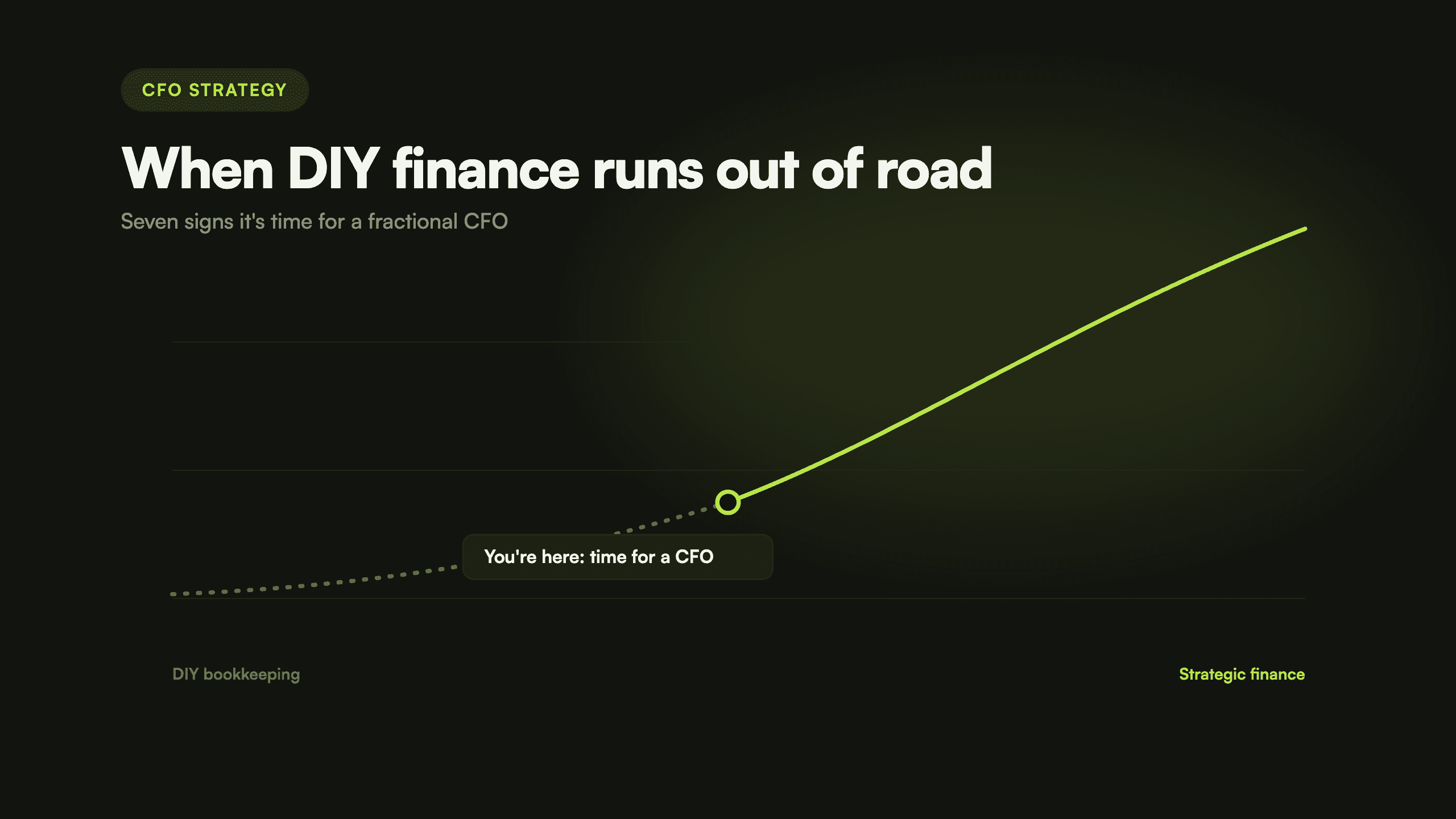
The gap most founders hit
Somewhere between $3M and $10M, the finance function you built for a small company stops fitting the company you've become. A bookkeeper keeps the books clean, but who tells you whether to hire, how to price, or if you can afford the next big move?
7 signs it's time
You're guessing at pricing. Big decisions on gut feel, not margin data.
Cash surprises you. You're profitable on paper but constantly tight.
You're raising or borrowing. Investors and lenders want a model you don't have.
You can't answer "what if." Hiring three people, opening a location, you can't see the impact before you commit.
Your books are clean but silent. Accurate numbers, zero strategy.
Growth is stalling profit. Revenue's up, margin's flat or down.
You're the CFO, and it's stealing time from the CEO job only you can do.
Why fractional
A full-time CFO runs $230k+ all-in. At your stage you don't need one full-time, you need senior judgment a few days a month. That's the whole idea behind fractional: the strategic finance brain, at a fraction of the cost, exactly when the decisions are getting expensive.

Want your numbers this clear every month?
Book a free 30-minute call. We'll look at where your finances stand today and map the fastest path to clean books and clear cash flow. No pressure, no pitch.
